Jatropha curcas L .


 - Overview

- Cultivation 

 - Propagation

 - Processing

- Product and co-products


Overview
 
 
Jatropha curcas or Physic nut is a perennial poisonous shrub (normally up to 5 m high) belonging to the Euphorbiaceae  family. It is an uncultivated non-food wild-species.

It’s a perennial shrub ( life cycle 20 - 30 years), easy to adapt in marginal areas and moderate regimes of annual rush (350-700 mm). It is resistant to a medium-long periods of dryness (it can be planted even in semi arid areas) and  the products are not edible.

The plant, originating in Central America, whereas it has been spread to other tropical and subtropical countries as well and is mainly grown in Asia and in Africa. It is used as a living fence to protect gardens and fields from wild animals.
 

Seeds production starts rapidly in 6/9 months; the plant reaches maturity after 5 years and it remains in constant production for 20 - 25 years. The seeds contain 28-36% oil (average: 32%) that can be processed to produce a high-quality biodiesel fuel, usable in a standard diesel engine. In good conditions the plant can produce 2 tons of oil per hectare (6 tons of seeds).


Jatropha cake or meal (co-extraction products) can be used as solid biomass for the production of energy or as fertilizer.


Cultivation


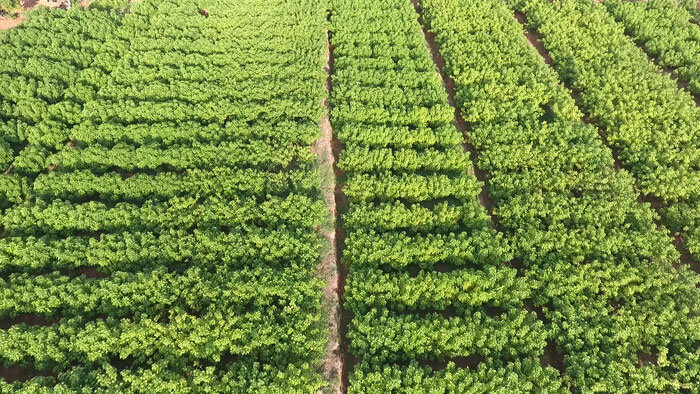
Cultivation is uncomplicated. Jatropha curcas grows in tropical and subtropical regions. The plant can grow in wastelands and grows on almost any terrain, even on gravelly, sandy and saline soils. It can thrive on the poorest stony soil and grow in the crevices of rocks. Complete germination is achieved within 9 days. It is usually propagated by cutting and  this yields faster results than multiplication by seeds but reduce rooting affecting arid resistant.
 
jatropha nursery
 
 
The flowers only develop terminally (at the end of a stem), so a good ramification (plants presenting many branches) produces the greatest amount of fruits. Another productivity factor is the ratio between female and male flowers within an inflorescence (usually about 1 female to 10 male flowers - more female flowers mean more fruits). Jatropha curcas thrives on a mere 250 mm (10 in) of rain a year, and only during its first two years does it need to be watered in the closing days of the dry season. Ploughing and planting are not needed regularly, as this shrub has a life expectancy of approximately forty years. The use of pesticides and other polluting substances are not necessary, due to the pesticidal and fungicidal properties of the plant.
While Jatropha curcas starts yielding from 9–12 months time, the effective yield is obtained only after 2 - 3 years time.
If planted in hedges, the reported productivity of Jatropha is from 0.8 kg. to 1.0 kg. of seed per meter of live fence. The seed production is around 3.5 tons / hectare (Seed production ranges from about 0.4 tons per hectare in first year to over 5 tons per hectare after 3 years).


Propagation

Jatropha curcas is usually propagated by seed. It is cross-pollinated and propagation through seed leads to a lot of genetic variability in terms of growth, biomass, seed yield and oil content. Jatropha curcas can be propagated by seed as well as vegetatively.  Vegetatively, this crop can be propagated by stem cuttings, grafting, budding as well as by air layering techniques. The investigation leads to the recommendation that cuttings should be taken preferably from juvenile plants and treated with 200 micro gram per litre of IBA (rooting hormone) to ensure the highest level of rooting in stem cuttings of Jatropha curcas.

Processing


Seed extraction is made simple with the use of the Universal Nut Sheller; Oil content varies from 28% to 36%. The oily seeds are processed into oil, which may be directly used to fuel combustion engines or may be subjected to transesterification to produce biodiesel. Jatropha oil is not suitable for human consumption, as it induces strong vomiting and diarrhea.


Product and co-products
 
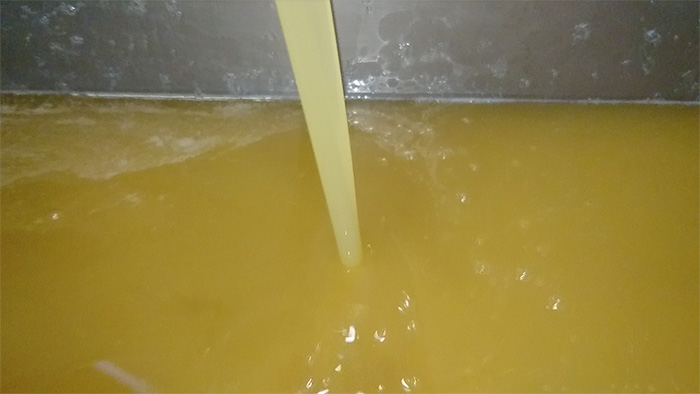
Jatropha Oil 
 
When jatropha seeds are crushed, the resulting jatropha oil can be processed to produce a high-quality biodiesel that can be used in a standard diesel car.

The development of the non-edible oils market in the last few years has been due almost completely to the increasing demand for biofuels. Among the non-edible a major role has been acknowledged to Jatropha oil thanks to its physical and chemical characteristics. In fact, from Jatropha oil it possible to produce a Biodiesel meeting the restricted specifications of the EU 14214.
Moreover the oil fits also well within the specifications requirements of the main providers of endothermic engines for electricity and heat generation able to run straight on vegetable oil (Wärtsilä and Man).fatty acid Jatropha

Aviation fuels may be more widely substituted with biofuels a such as jatropha oil than fuels for other forms of transportation. There are fewer planes than cars or trucks and far fewer jet fueling stations to convert than gas stations. On December 30, 2008, Air New Zealand flew the first successful test flight with a Boeing 747 running one of its four Rolls-Royce engines on a 50:50 blend of jatropha oil and jet A-1 fuel. Subsequently, Air New Zealand and Houston based Continental Airlines have run tests in Jan. 2009, further demonstrating the viability of jatropha oil as a jet fuel, especially for low claudification point. Japan Air also plans test flights in Jan. 2009 as well.

 
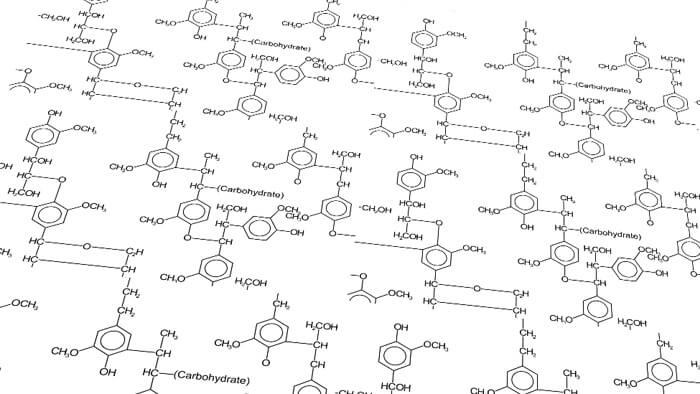
Jatropha oil composition

Jatropha seed cake
 
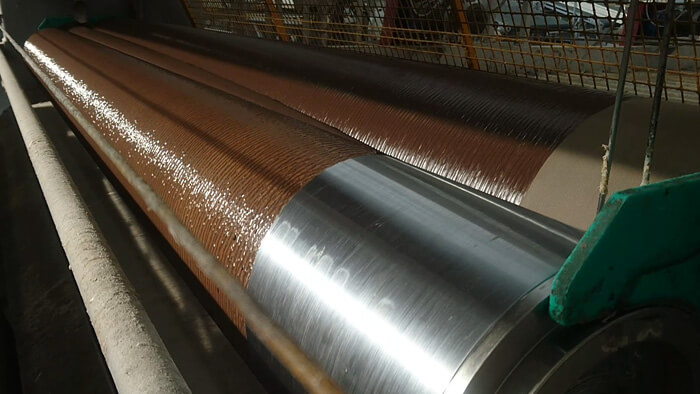
The residue of oil extraction (seed cake) can also be processed and used as biomass feedstock to power electricity plants or used as fertilizer (it contains nitrogen, phosphorous and potassium). Another possible use for seedcake is as potential feedstock in gasification plants; reported value for Gross Calorific Value (GCV) of 18 MJ/kg and humidity content of approx. 8% make Jatropha seedcake an interesting biomass feedstock for syngas production. The gas obtained, even though has a rather low caloric value (10-15 Mj/Nm3), can be used in turbines or Diesel engines for electricity production.


Benefits

•    High oil yield per hectare
Jatropha is able to produce up to 1,5 tons of oil per hectare. Seeds are rich in oil content (32-27%). The tree is able to grow in area of low rainfall regime (200 mm per year) and in degraded lands. In highly irrigated areas or rainy areas Jatropha grows with higher yield.

•    Quality of the oil
The oil obtained by crashing the seeds is excellent for energy production purposes. In fact, refined Jatropha oil can be used to run stationary diesel engines for energy production. Additionally, it could be used as raw material for high standard (EN 14214) Biodiesel production.

•    Easy establishment, relatively quick growth, hardy crop
It can be planted in marginal lands such as: along the canals, roads or railway tracks, on farmers’ field borders as a boundary fence or as live hedge. It is resistant in arid/semi-arid areas and even on alkaline soils. It is used to reclaim wastelands outside and inside forests.

•    Atmospheric carbon storage
Jatropha stores it in the woody tissues and assists for soil carbon building up.
Both Jatropha uses, as power production and biodiesel production, can represent a way to reduce GHG emissions and therefore eligible within the Clean Development Mechanism (CDM) of Kyoto:

    From one hectare of Jatr. plantation, it is possible to sequester 40 tons of CO2 due to land afforestation;
 
    One ton of biodiesel from Jatr. can avoid about 3 tons of CO2 emissions;
 
    One ton of Jatr. oil for power generation can avoid 4 tons of CO2 emissions;
 
    By firing one ton of Jatr. seedcake instead of coal for electricity production, it is possible to reduce about 35% of CO2 emissions.

•    Energy securing
but also to decrease Country’s fossil fuel dependency and economical sensitivity to its price volatility, helping to achieve a higher energy security and diversification of energy sources.

•    Easy intercropping with other cultivations
 
•    Easy seed harvesting
 
•    Long seeds storage
The Jatropha seed can be stored for about 6 months, during which significant changes are not detected; actually six month storage does not affect the seeds oil content.

•    Jatropha plants are short and the harvest season is before the rainy season
 
•    Not edible by humans and other animals
 
•    Jatropha does not compete with food crops and can be used as protection for cash crops
 
•    Readily growth from plant cutting or seeds up to 3 – 5 m of height
 
•    Not good as forage material for its toxicity
 
•    Highly pest and disease resistant
 
•    Medicinal value
 
•    Jatropha bark contains tannin and the plant is a potentially honey producer
 
•    Several Jatropha co-products’ applications
 
When referring to co-products the portions of biomass are:
 
   Coat from the seeds separation (about 45% w/w of the whole fruit);
 
   Seedcake from the oil extraction (about 35% w/w of the whole fruit);
 
   Filtration residuals (about 2% w/w of the whole fruit).
 
The most common use of above-mentioned biomass is as a fertilizer for its high NPK value.  Jatropha co-products can also be used, under specific condition, for power generation.
 
Other applications include:    
 
•    Power (heat and/or electricity) generation from biomass combustion
Careful attention to the particular (physical and chemical) characteristics of the biomass and to the combustion has pointed to the fluidized bed boiler as suitable solution, especially for the seedcake (seedcake heat value is about 17 MJ/kg with an oil content of about 10% w/w). Homogeneity, moisture level and ash content are the principal parameters that have to be kept under control.
 
•    Biomass gasification
This technology represents an interesting opportunity for power or syngas production (gas mixture that contains varying amounts of carbon monoxide and hydrogen). Again Fluidized bed appears to be the most suitable technology. It is key to note that there are many parameters that can affect the gas mixture quality and at present biomass gasification is not yet a commercial technology.
 
•    Biogas production
The anaerobic digestion of Jatropha co-products is a recent interesting application. Jatropha oil seedcake has biogas generation potential within a range of 220 - 250 l per kg of cake under mesophilic temperature range of anaerobic digestion (25 and 40 °C). The biogas methane content, derived from that biomass, has been found to range from 65-70 % against 55 % from cattle dung. The best dilution ratio is 1:4 (cake : water). The gas can be used as engine fuel for the energy production.

Limitations


The Jatropha also suffers from certain limiting factors to be kept in mind while dealing with the species. These are as follows:

•    Jatropha cannot be grown on waterlogged lands and slopes exceeding 30°.

•    The ideal climatic conditions for Jatropha can be summarized as annual rainfall not exceeding 600 mm in moderate climatic conditions, 1200 mm in hot climatic zones and soil pH less than 9. The atmospheric temperature should not fall below 5° C as the plants are sensitive to ground frost that may occur in winters.

•    Jatropha seeds possess toxicity.

•    The plant develops its toxicity after the 5-6 months therefore it is vulnerable to animals attacks until that moment.

•    Jatropha is also host to the fungus "frogeye" (Cercospera spp.), common in tobacco.

•    It was observed that when oils are stored, their Free Fatty Acid (FFA) as well as viscosity increased. The Jatropha oil behaves as other vegetable oils: their storability can last one year without significant FFA changes. Vegetables oils need to be kept in storage conditions that prevent undue degradation. Exposure to air and moisture must be minimized.

Agroils activities in the world


World names
 
 
                  COUNTRY/        NAME
                  LAUGUAGE
 
          Afrikaans    Purgeerboontjie
          Angola       Cassiu
          Arabic        Habel meluk
          Brasil         Pinhão-manso
          Brasil         Andythygnaco
          Brasil         Figo-do-inferno
          Brasil         Grão das ilhas Molucas
          Brasil         Jetrofa da Índia
          Brasil         Mandubiguaçú
          Brasil         Manduigaçu
          Brasil         Mundubi assu
          Brasil         Mandubi-guaçú
          Brasil         Pinhão bravo
          Brasil         Pinhão da Índia
          Brasil         Pinhão-depurga
          Brasil         Ricino-maior
          Brazil         Pinhão manso
          Cambodia  Hong kwang
          Chinese     Yu lu tzu
          Cuba         Pinon de leche
          Dutch         Purgeernoot
          English       Physic nut, Purging nut
          Fijian         Bagbherenda
          French       Pourghère, pignon d'Inde
          German     Purgiernuss
          Haiti          Médicinier
          Haiti          Metsiyen
          Hindi         Bagbherenda
          Hindi         Bakrenda
          Hindi         Ranijada
          Hindi         Ratanjot
          Indonesian Jarak pagar
          Italian       Fagiola d'India
          Mali           Baganí
          Mali           koushini fli
          Maya         Sikil-tè
          Mozambique Galamaluca
          Nepali        Ramjeevan
          Nicaragua   Tempate
          Nigeria       Lapalapa
          Philippines  Tubang bakod
          Portuguese Purgueira
          Sanskrit      Parvaranda
          Senegal      Tabanani
          Somali       Cantal muluung
          Spanish      Tartago
          Swahili       Mbono
          Taiwan       Dang iu ciu
          Tanzania    Mbono
          Thai           Sabuu dam
          Tonga        Fiki
          Tswana      Mathlapametse
          Venda        Mafuredonga
          Viet Nam    Cay Dau Lai
          Vietnamese Ba dau me
          Vietnamese   Pe fo tze
          Zimbabwe     Umhlafutho
          Zulu            Inhlakuva


Link, references, publacations


News
Agroils' Ghana Joint Venture finalist at the CTI-PFAN Forum Johannesburg 14-15 September
SOIL ltd Agroils' local joint venture with the Ghana company SmartOil has been selected among best 10 initiatives among more than hundreds of renewable energy projects throughout Africa.
 
Agroils at New Carbon Energy

On february, 11th 2010, Agroils partecipates at "New Carbon Energy-Day - biofuel dalla sintesi di nuovi prodotti energetici" in Milan as speaker. Giovanni Venturini del Greco, President of Agroils s.r.l., will presents the report: "Cultivating deserts, steppes and sea: biofuel from algae and non-edible crops".

Read more...
 
Agroils selected as a "best practice for social venture"

Agroils, thanks to the intensive learning from the Best Fulbright program,has been selected as a "best practice for social venture" for the Italian Global Social Venture Competition (GSVC). Thank you for all support you are offering. 

Read more...
 
A new market for suitenable aircraft biofuels

Klm launch the use of biofuel for commercial aviation.

L'espresso - December, 10th 2009.

Read more...
 
Press release - Agroils
Bioenergy International publish an article about Agroils activities
Read more...
 
Agroils at European Biodiesel 2009


Read more...
 
Boeing hydroplane flies on 100% sustainable biofuel
Read more...
 
Toyota to invest in Philippines jatropha bio-diesel plant
Read more...
 
Agroils take part to the "country presentation" for Senegal and Sierra Leone at the MAE
Read more...
 
5 new Airflight company join the Sustainable Aviation Fuel Users Group
Read more...